Cubbytech: October 2016

Sunday, 23 October 2016

Facebook changes nudity policy to allow for ‘newsworthy’ photos. Changes arrive after the site’s ban of an iconic Vietnam War photograph.

Facebook, long criticized for a, shall we say, unevenly applied nudity policy — Pulitzer Prize-winning photographs are a no-go, but revenge porn is kosher — is apparently trying to come up with a more nimble approach for addressing nudity in its community guidelines.
In a blog post on Friday, Joel Kaplan, Facebook’s vice president of global public policy, and Justin Osofsky, vice president of global operations and media partnerships, announced that “continued feedback from our community and partners” about “the kinds of images and stories permitted on Facebook” prompted some self-reflection and adjustment:
Observing global standards for our community is complex. Whether an image is newsworthy or historically significant is highly subjective. Images of nudity or violence that are acceptable in one part of the world may be offensive — or even illegal — in another. Respecting local norms and upholding global practices often come into conflict. And people often disagree about what standards should be in place to ensure a community that is both safe and open to expression.
The post went on to explain that, in the coming weeks, Facebook will start to accept “more items that people find newsworthy, significant, or important to the public interest — even if they might otherwise violate our standards.” The goal is “to allow more images and stories without posing safety risks or showing graphic images to minors and others who do not want to see them.”
It sounds like Facebook is implementing its own version of the third prong ofthe Miller test, the Supreme Court’s way of determining whether or not any content is obscene; Facebook is essentially saying that if a work passes the SLAPS test — if it has serious literary, artistic, political, or scientific value — its worth outweighs its potential ability to scandalize or offend.
The announcement comes in the wake of Facebook’s widely lambasted call toremove the iconic Vietnam War “Napalm Girl” photograph from the site. The reasoning: The Vietnamese girl in the famous image is naked. Backlash predictably ensued (including a letter from none other than the prime minister of Norway, who criticized the photo’s removal and reposted it on her own page) and Facebook changed course. At the time, the site released a statement explaining that while “an image of a naked child would normally be presumed to violate our community standards, and in some countries might even qualify as child pornography. In this case, we recognize the history and global importance of this image in documenting a particular moment in time.”
Shortly after that, Facebook found itself on the receiving end of a lawsuit from a now 14-year-old girl, whose naked photograph was displayed on a “shame page” as “an act of revenge,” without her consent, from November 2014 to January 2016. Her lawsuit alleges that Facebook could have used a tracking process to ID the image and prevent its re-publication, but that Facebook declined to do so. (Facebook tried and failed to get the case thrown out.)
The dicey part of this progress is that the power to determine what is and is not newsworthy on Facebook — just like the power to determine what is and is not pornography — still lies with Facebook alone. (Though they say they’ll be consulting with “partners” and “the community” to make these decisions, who knows what that will mean in practice?) The track record is not the best.
Take the back-and-forth around breastfeeding images, which Facebook banned until enough users complained, at which point the community guidelines were altered to clarify that “we restrict some images of female breasts if they include the nipple, but we always allow photos of women actively engaged in breastfeeding or showing breasts with post-mastectomy scarring.” These rules, like all rules, betray a value system, and it’s one that is a little unnerving: So, mothers’ breasts are beautiful but everyone else’s are porn?
That was in 2015. Just last week, Facebook removed an article about mammograms from a major newspaper in France because the story’s lead image showed a woman — obviously — getting a mammogram, and one of her nipples was exposed. (In 2015, the site removed a different mammogram photo and banned the administrators of the page that shared it.) The site seems to operate under the misguided, even dangerous belief that women’s bodies are inherently sexual; that there is no context, save for the obviously maternal or ill, in which a woman’s nipples do not exist to titillate. Men’s bare torsos do not violate the site’s terms.

Saturday, 15 October 2016

Snapchat launches sunglasses with camera


Messaging app firm Snapchat has announced its first gadget – sunglasses with a built-in camera. 
 
The device, which the company is calling Spectacles, will go on sale later this year priced at $130 (£100). The glasses will record up to 30 seconds of video at at time. As part of the announcement, Snapchat is renaming itself to Snap, Inc. The renaming decision underlined the company’s apparent ambition to go beyond the ephemeral messaging app, a product which is highly popular with young people. An article published by the Wall Street Journal on Friday showed Snap’s 26-year-old creator Evan Spiegel in a series of pictures taken by legendary fashion photographer Karl Lagerfeld. In an interview, Mr Spiegel explained his rational for creating Spectacles. “It was our first vacation, and we went to [Californian state park] Big Sur for a day or two. We were walking through the woods, stepping over logs, looking up at the beautiful trees. “And when I got the footage back and watched it, I could see my own memory, through my own eyes – it was unbelievable. “It’s one thing to see images of an experience you had, but it’s another thing to have an experience of the experience. It was the closest I’d ever come to feeling like I was there again.” On Saturday, Snap released some limited information about how the glasses will work. Footage will be recorded in a new, circular format which can be viewed in any orientation, the company said. The battery on the device will last around a day. A light on the front of the device will indicate to people nearby when the glasses are recording. Prior to confirmation from Snap about the product, news website Business Insider published a promotional video it found on YouTube showing the product. The video has since been taken down. 
 
Broken Glass 
Spectacles will remind many of Google Glass, an ill-fated attempt by the search giant to create smart glasses. While Google Glass did get into the hands of developers around the world – at a cost of $1,500 each – the device never came close to being a consumer product. The company eventually halted development, but insisted the idea was not dead. Though Glass was beset by hardware issues, perhaps its main flaw was the public perception. At worst, many saw it as troubling, privacy-invading technology. At best, others just considered it ridiculous-looking. However, with a far lower price point, and likely adoption by influential celebrities, Snap’s Spectacles stand a solid chance of being seen as cooler than Google’s attempt. “If you look at the kinds of glasses millennials wear, the design is very ‘in’,” suggested Carolina Milanesi, a consumer technology analyst from Creative Strategies. “Making them sunglasses helps hide the camera better, but it also limits the usage somewhat – you’ll need to be outside in daylight. She added: “The name change is interesting as it would indicate a change in focus away from messaging, which with Spectacles makes sense. Snap is perhaps becoming more about life-logging, content generation and story-telling.” According to the WSJ, Snap is not treating the device as a major hardware launch, rather a fun toy that will have limited distribution. “We’re going to take a slow approach to rolling them out,” Mr Spiegel told the newspaper. “It’s about us figuring out if it fits into people’s lives and seeing how they like it.”

Source: http://3news.com/

Tigo Business partners with Microsoft, Lenovo and IT Worx to support SMEs


Tigo Business, the enterprise arm of Tigo, offering world-class Information and Communications Technology solutions for corporates and SMEs has partnered with Microsoft, Lenovo and IT Worx to support small to medium businesses in Ghana with relevant connectivity to maximize their operations and boost productivity through an initiative called the Tigo Business SME Empowerment Roadshow.  
 
The partnership brings together an ecosystem of business solution providers ranging from content, connectivity, devices, software and financial expertise to help businesses build solid processes at world class standards and give them a competitive edge both locally and in the sub-region. Commenting on the partnership, Chief Executive Officer of Tigo Ghana Roshi Motman said, “We are very excited about this partnership because it’s the first of its kind in our market. As a telecom business solutions provider, we believe in providing our clients with tools that will make them more efficient, have greater control, and ultimately become more productive.” The motivation behind this partnership was founded on the need to provide a creative alternative to multiple service providers, each offering a plethora of overlapping services to the same business audience. With this partnership, Tigo intends to develop a one-stop solution for smarter working for SMEs – one that would provide greater cost effectiveness and operational efficiency. “At Tigo, we are not only interested in providing connectivity, but creating a platform where all the major players who offer solutions to the SME ecosystem can merge and offer a one-stop-shop with tailor made solutions for diverse business needs. My key message to all SMEs is, you don’t need to go to any other provider to take care of your needs. Come to Tigo Business and we will take your business to the next level,” Motman added. Each partner brings an array of expertise to the table. Microsoft will provide access to email, domain names, and basic book keeping tools under the Office 365 services. Through its subsidiary partners, ITworx, will provide a rich portfolio of enterprise productivity solutions, while Zepto will provide tablets with keyboards for easy use in stores, POS terminals and software solutions specifically designed for the enterprise space by ITWorx. The Tigo Business SME Empowerment Roadshow will see all member organizations travel around key cities in Ghana to provide content, device and connectivity solutions to SME stakeholders. The SME Clinic Series provides a very real opportunity to make an impact in developing skills, professionalism and entrepreneurship within the SME community, through the delivery of cutting-edge tools and rich expertise, thus contributing positively to the country’s economy. The Country Manager for Microsoft Ghana, Derek Appiah, noted, “Microsoft’s goal is to enable SMEs in Africa to start, grow and accelerate their businesses through affordable access to technology, world-class skills and innovation. We aim to help this sector sustain their growth, reach their full potential and turn their ideas into reality via initiatives such as Biz4Afrika – an online hub for SMEs in Africa. “The Tigo Business SME Empowerment Roadshow will enable SMEs in Ghana to know how to make sense of these solutions for their businesses, have a solid understanding of the local environment and most importantly tap into the power of mobile and cloud technology to increase productivity, communicate and collaborate anytime, anywhere, from any device,” added Appiah.

Facebook Messenger made 95% slimmer


Facebook has announced a “slimmed down” version of its Messenger app for countries where older smartphones and slower net speeds are more common. 
 
The company said Messenger Lite had the “core features” of the full app such as the ability to share text and photos. The app will compete with Facebook-owned WhatsApp, which the company says is used by more than a billion people. One analyst said offering a stripped-back service for developing markets would “drive adoption of services”. “Targeting users in emerging markets with ‘lite’ apps is not a new phenomenon,” said Jack Kent, of the IHS Markit consultancy. “Companies such as Google and Line also offer streamlined services for users in emerging markets. “It makes sense to provide streamlined service to drive adoption of services rather than monetise users immediately.” Facebook was criticised in June after it removed access to messages from its mobile website, in an attempt to steer people to use the Messenger app. Stan Chudnovsky, head of product at Facebook Messenger, said the company found people sent more messages when messenger was offered as a separate app. He told BBC News people also found it easier to discover new features when they were not “buried” inside the bigger Facebook experience. The company has slimmed the Messenger Lite app down to under 10MB, so it takes up less space on smartphones with limited storage. That is up to 95% smaller than the full-size Messenger app, which case top 150MB on Android devices. The Lite app will be released for Android devices in Kenya, Tunisia, Malaysia, Sri Lanka and Venezuela first. 
 
Source: BBC

Turn off your dangerous Note 7 phone- Samsung tells owners


South Korean tech giant Samsung has urged owners of the Galaxy Note 7 to turn off its high-end smartphone while it investigates new reports of the device catching fire. 
 
 The firm also said it would stop all sales of the phone. Samsung recalled 2.5 million phones in September after complaints of exploding batteries, and later insisted that all replaced devices were safe. But there are now reports that even those phones were catching fire. A man in Kentucky said he woke up to a bedroom full of smoke from a replaced Note 7, days after a domestic flight in the US was evacuated after a new device started emitting smoke in the cabin. “Because consumers’ safety remains our top priority, Samsung will ask all carrier and retail partners globally to stop sales and exchanges of the Galaxy Note 7 while the investigation is taking place,” the company said. “Consumers with either an original Galaxy Note 7 or replacement Galaxy Note 7 device should power down and stop using the device and take advantage of the remedies available,” it added. As late as Monday evening a spokeswoman insisted the phones were safe to use. South Korean media reports suggest the company is likely to stop selling the phone permanently. The problems for Samsung come at a crucial time for the firm, technology analyst Andrew Milroy of Frost & Sullivan told the BBC. “Samsung had been making a comeback against its rivals. This catastrophic product fault will seriously damage its competitive position in the smart phone market,” he said. Jake Saunders of ABI research said the situation for Samsung was now “very serious” with “the consequences beginning to snowball”. “The concern now will be the knock-on consequences on the reputation of the brand.” Consumer tech analyst Caroline Milanesi of Creative Strategies told the BBC that Samsung should “call it a day” on production of the Galaxy Note 7 to limit long-term risk to the brand. However, South Korea’s finance minister has warned that the country’s exports would be hurt if the phone model is scrapped altogether. “Right now we can’t tell what the impact will be in the long term. It’s up to the company and the government cannot interfere,” said Yoo Il-ho. “But if they do scrap the model, it will have a negative impact on exports.” 
 
Source BBC

Saturday, 8 October 2016

Ecobank, MTN Launch Tbill4All


Ecobank Capital Advisors Ltd., a subsidiary of Ecobank, in collaboration with MTN Mobile Money, on Thursday introduced the Ecobank TBill4All onto the Ghanaian market.
The Ecobank TBill4All, a self service, digital product that allows Ghanaians to invest in 91-day and 182-day Treasury Bills using the mobile money platform is the first of its kind in the sub-region.
It's designed to increase savings and investments, as well as mass participation in the securities market.
Every Ghanaian with a mobile phone can now invest in T-Bills anywhere with as little as GH¢5.
Speaking at the launch, the First Deputy Governor of the Bank of Ghana (BoG), Millison Narh, commended Ecobank and congratulated them for evolving the product.
He said the development of Tbill4All was a testament to Ecobank's commitment to leveling the playing field in the investment sector.
Dr Adu Anane Antwi, Director-General of the Securities & Exchange Commission (SEC), said the product would enhance Ghana's economic growth.
Ebenezer Asante, Chief Executive Officer (CEO) of MTN Ghana, in a remark, applauded the collaboration between his outfit and Ecobank Ghana, saying that that would produce wonderful packages to better serve Ghanaians in the wider space of financial inclusion.
George Mensah Asante, Executive Director at Ecobank Ghana and Head of Consumer banking for Ecobank Ghana and Anglophone West Africa, speaking on behalf of the Group Executive for Consumer Banking, Patrick Akinwuntan, said Ecobank was interested in the promotion of financial services through technological enhancement, adding that the service formed part of a series of technologically enabled platforms that would transform banking and financial services in Ghana.
The service will also be available on Ecobank internet banking, Ecobank Mobile App and eventually on all networks of the group to ensure financial inclusion across the continent.
Ecobank has grown consistently over the years to become one of the leading and most recognised corporate brands.
The bank operates in 36 countries in Africa, with representative offices in Paris, London, Dubai and Beijing to support customers who conduct cross-border business across the globe.

Wednesday, 5 October 2016

Motorola posts full list of phones that will get Android 7.0 Nougat update

After confirming Android 7.0 for a few of its devices last month, Motorola has now posted the full list of its smartphones that the company says will get the Nougat update.
The company also re-iterated that the update will start rolling out in Q4, and revealed that the Moto Z and Moto G (4th Gen) will be getting it first.
Source

Sony Xperia XZ hits US, Netherlands and Germany


The Sony Xperia XZ is now available to purchase at major retailers in the Netherlands, priced predictably at €699. Sony Mobile's online store in the country, on the other hand, refers you to carrier websites, where you can opt for a contract deal.
At the time of writing, the company's other stores across Europe still have the smartphone in pre-order state. It may be worth investigating your local retailers, as there as at least one store in Germany that says it will ship the XZ in 2-4 days.
Meanwhile, in the US, Best Buy apparently has the smartphone in stock. At least that's how we interpret the 1 business day shipping. Price in the US is $699. You can order it through Amazon as well, but that would mean waiting until October 12.
Other countries aren't as lucky. The UK, for one is in an odd state, where the company store lists it as 'out of stock' but you can no longer pre-order. Amazon UK is still taking pre-orders with a shipping date set for October 18.

Nokia’s new Android smartphones to be released in Q4 2016 Nokia’s new Android smartphone spotted on GeekBench


New Nokia Android smartphone named Nokia D1C spotted on Benchmarking website

The fact that yesteryears uncrowned king of mobiles, Nokia has been looking to make a comeback is well known and the only question before the Nokia fanboys (I included) is when the new Nokia’s new Android smartphones will be available to buyers. We have already reportedhere about how Nokia is planning a comeback to the market with not one but two Android smartphones.
Ever since, we had reported on the leaked press renders of the new Nokia smartphones, we have been inundated by messages, both here and our social media for further news about Nokia’s forthcoming Android smartphones. Well, there is a good news of sorts for all Nokia lovers. A benchmark that was recently spotted on GeekBench suggests that an Android-powered device dubbed the Nokia D1C is in the works.
The Nokia smartphone spotted on Geekbench is not the expected Nokia flagship Android smartphone by any means. The benchmark suggests the phone is powered by a Snapdragon 430 processor clocked at 1.4GHz, and the multi-core score of 3120 and is tentatively labelled as Nokia D1C. It is not quite the specifications Nokia fans will be expecting but nonetheless it’s a proof that Nokia’s Android foray is real.

However, good news is that Nokia fans and other smartphone buyers may be able to lay their hands on new Nokia Android smartphones by end of this year if the benchmark reports are correct. Who would blame them for eagerly waiting for Nokia’s Android smartphone comeback? We all remember the good old days when we could easily throw a Nokia 3310 at somebody and then pick up the phone to start speaking again. Also, the battery on Nokia mobiles that lasted weeks could easily better the half day battery life we manage to squeeze out of our current crop of Android smartphones.
Hopefully, the Nokia Android smartphone comeback is expected to live up to the fans expectations and deliver really rugged smartphones that can withstand minor drops which current crop can’t.

Know how to update your Android OS Know how to update your Android OS


How to update an Android smartphone

When it comes to the smartphone OS market share, Android OS is the undoubted leader. At the moment, it is very difficult for a registered OS to compete with Android OS, as it is an open source project. With Google releasing major Android versions annually with a lot of new additions, it is always important that you are running the very latest software available for your Android smartphone to get the best performance and features for your Android device. And, this doesn’t mean only apps but also the Android OS.
So, why should one update his or her Android OS? One should update the Android OS for the following reasons:
• Performance enhancements
• Better stability
• New features
• Security Updates
• Bug fixes
• Possibly increased battery efficiency
Steps to update your Android OS
It should be noted that your ability to update your Android-based smartphone may be limited by the maker of your device. Your manufacturer is responsible for rolling out those updates to your device. In general, the newer, high-end smartphones made by well-known companies are more likely to offer the ability to upgrade Android than the low-end devices made by lesser known companies. Also, the look of the interface may vary from brand to brand. However, overall, the steps should work pretty much on all Android devices.
Step 1: Launch the Settings app on your Android device.
Step 2: Scroll down to check for “About phone” or similar and click on it.
Step 3: Now, you will find an option as “System Updates”/“Software Update”. Just tap on it. Now, it will perhaps look for an available Android update for your device or would provide you with more options.
Step 4: If you find more options after clicking on “System Updates” or similar, you need to click on “Check for updates now”/“Software update check” or a similar button, which would start looking for an update for the device.

Samsung to copy Apple, Galaxy S8 may ditch 3.5 mm headphone jack like iPhone 7

While the faulty batteries are considered to be the reason behind the overheating and recall of 2.5 million devices, it appears that the company’s eagerness to get the better of Apple led to faults in the production of Samsung’s Galaxy Note 7.
If this was not enough, Samsung is expected to follow Apple and ditch the industry-standard 3.5mm headphone port, just the way its Cupertino giant did it in its newly launched iPhone 7 devices. It is rumoured that Samsung is looking to develop a Lightning-like port of its own that would support audio.
The USB Implementers Forum published the Audio Device Class 3.0 specification that gives device makers the standard they need to pipe sound through USB-C ports on everything from smartphones to PCs. This is expected to help Samsung, and any other company, to drop the 3.5mm headphone jack in exchange of USB-C for audio in the very near future without having to think about making audio support into USB-C or a new, exclusive port.
Audio over USB-C means that consumers need to upgrade their headphones to USB-C headphones as well, but the audio gains might be worth it. Besides from offering better digital audio support (such as headphones with custom audio processing), it will also offer power-saving features and keyword detection. Also, the USB audio will offer a better sound experience while consuming less battery power and enable voice-recognition features, reports Engadget. Removing the 3.5mm audio port from a handset not only helps with waterproofing, but it also means slimmer devices.
A few months ago, Intel already explained that sound over USB-C is the future, and it’s likely that many device makers will adopt it. In addition to Apple, Motorola and LeEco have already launched smartphones that do not have dedicated headphone jacks. Now that the USB-C audio spec is finally official, it is likely that Samsung may follow suit.
At this point in time, this is all speculation as the South Korean giant hasn’t said anything about the Galaxy S8. Samsung traditionally launches new Galaxy S flagships at the Mobile World Congress (MWC) and next year’s MWC takes place in February; so, it’s already quite early.
Source: BGR

Microsoft has rolled out a new Windows Insider Preview for those in Fast Ring. The new build brings along Ubuntu 16.04 in Windows Subsystem for Linux. The other changes come in the form of new Edge extensions and NAS improvements.
In the past, Microsoft has called Windows 10 an operating system that’s in progress. Justifying the same, Microsoft keeps on releasing new Windows 10 builds often and gathers feedback from the users. The most significant release was the recent Windows 10 Anniversary Update.
For Windows 10 Insider who are a part of the Fast Ring, here is a great news. Microsoft has just rolled out a new Windows 10 Build 14936 for both desktop and mobile devices. The new release brings along some improvements and bug fixes.
When Microsoft introduced Bash on Windows 10, it installed Ubuntu 14.04 Trusty Tahr. However, the recent build updates the Windows Subsystem for Linux (WSL) and installs Ubuntu 16.04 Xenial Xerus. It should be noted that these changes will only work for Windows Insiders that are enabling WSL for the first time. The existing users need to manually upgrade their 14.04 installation.
There’s an issue that users should keep in mind while using WSL. It’s experiencing an issue with some socket implementations and the bugcheck crashes with the error “ATTEMPTED EXECUTE OF NOEXECUTE MEMORY”. The developers hope to fix the issue at the earliest opportunity.
For a complete list of fixed issues in Bash on Windows 10, you can read therelease notes.
The other features include some new Edge extensions like Turn Off the Lights, Tampermonkey, and Microsoft Personal Shopping Assistant.
Another notable feature is the authentication changes for NAS and home file servers that stopped working in the previous Insider Preview Builds.
For more information, you can visit Microsoft’s announcement post.
Did you find this article helpful? Don’t forget to drop your feedback in the comments section below.

How To Encrypt Your Facebook Messenger And Send Self-destruct Texts

After WhatsApp, Facebook has now implemented end-to-end encryption option in its Messenger app. Users need to enable the Secret Conversation option to get started. This feature also comes with a self-destruct option for extra security. By following some simple steps, you can enable this option on your device.
Working towards the same goal of security, recently, Fossbytes implemented end-to-end HTTPS encryption on its influential media platform. The need for end-to-end encryption is something that can’t be questioned in the present scenario. All messaging apps and email providers must implement this feature to offer more secure services to the users. Earlier today, we wrote about the lack of encryption in Yahoo emails and how theyhelped the U.S. government read emails of the users.
Last spring, popular IM app WhatsApp rolled out the largest end-to-end encryption in messaging industry. Facebook, WhatsApp’s parent, has decided to implement the same feature in its popular Messenger app. A couple of days ago, Facebook also rolled out a lite version of the same Messenger app.
This feature of encrypted messages is called Secret Conversations that’ll benefit all 900 million Facebook Messenger users. This feature lets a person choose an option to encrypt the messages. As a result, no one, not even Mark Zuckerberg or NSA, can read the messages except the people using the end devices.
The Secret Conversations use the Signal encryption protocol. It’s available in the updated iOS and Android Messenger apps.
However, these Secret Conversation threads aren’t Secret by default. You need to perform some simple steps to get it done and secure your important communications. Enabling this option is worth it. So, let’s take a look at how to do this:

How To Encrypt Your Facebook Messages?

1. To encrypt your Facebook messages, you need to open Messenger and select the profile icon from the menu. Now look for the Secret Conversation options.
2. Tap on the Secret Conversation option.
3. Toggle the Secret Conversations On. It’ll show a small popup telling that “This will be the only device you can send and receive messages.” This means that you can set up the encrypted messages on only one device. To proceed, tap Tun On in the pop-up.
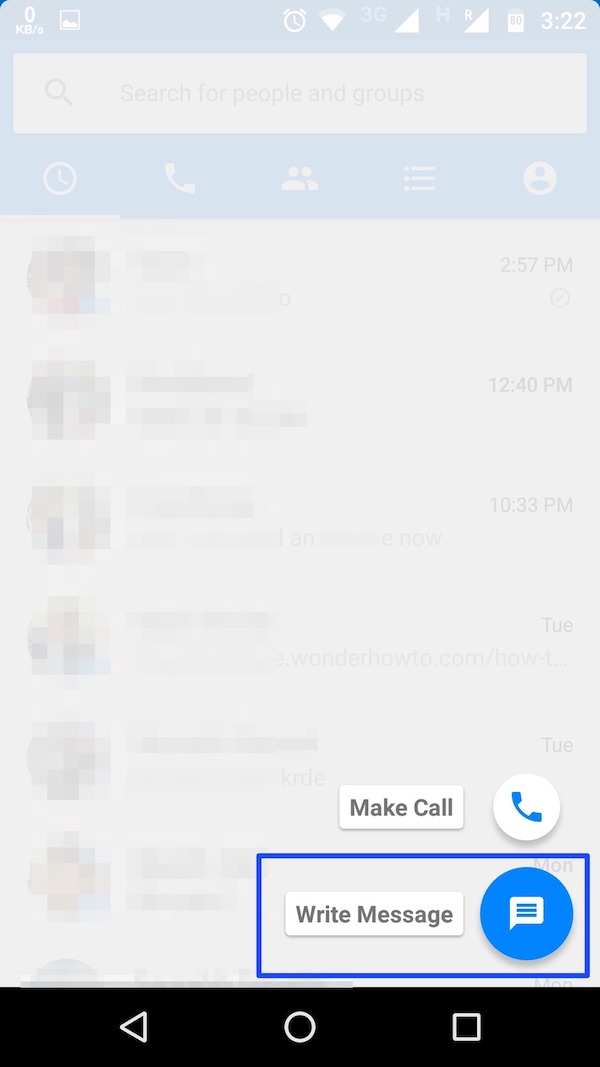
4. Now come back to the Messenger home screen and tap on the Write Message bottom. This option might be present at top or bottom locations, depending on your device (Android or iOS).
5. From the top right corner, choose the secret message option. Turn it on.
6. Now you are ready to chat with a friend. Select a friend and get started.
7. Please note that if your friend hasn’t enabled the Secret Conversations option, he/she won’t be able to see them. So, ask them to turn it on. 
8. Encrypted messages on Messenger also come with an option to self-destruct the texts. You just need to tap on the clock icon to send the message with self-destruct option.
9. From the top right corner in a Secret Conversation, you can see the Device Keys and compare it with the ones on your friend’s device to ensure the security of the chat.
Did you find this article helpful? Don’t forget to drop your feedback in the comments section below.
 

Google reveals Pixel phone that bakes in AI assistant, to let people chat with their handset

Google has unveiled its Pixel, a new phone that's meant to be a robot assistant for your whole life.
The first phone designed by Google on the inside and outside looks almost exactly the same as most other recent handsets – a silver and white rounded square, made of metal and glass. But the company hopes that it can stand apart by baking in its Assistant to the heart of the phone.
Google's Assistant works akin to Siri – it is opened by pressing a button and then talking to it. But it calls on all of the information that Google stores, and the compny claims that it is fast to understand what people are looking for and even faster to show them what they need.
The Assistant can show any information that people need. For instance, it can look at what's on screen when someone asks "How far to this restaurant?", and then call on Google's voice and picture recognition technology, as well as information from places like Google Maps, to show the answer to a user's question.
The company said that the phone calls on five different parts of Google's technology. That includes the Assistant, but also photography tools, storage options, communication apps and its entire suite of virtual reality technologies.
Google built the phone specifically for VR, it said, including adding sensors and other features. And it also released a new headset called Daydream View, the first headset ready for its Daydream platform that is meant to be more comfortable and customisable than other headsets.
The hardware does have some innovations, however. The new phone includes features like quick battery charging, which allows the phone to be charged up a substantial amount in just 15 minutes.
Not all of the features are new: the company has included the headphone jack, rather than dropping it like Apple. The company mocked its rival in ad during the event, joking that the 3.5mm headphone jack was the only thing not new in the phone.
The phone's camera is the best ever made, according to an industry watchdog consulted by Google.
The camera overlaps with the kind of internet services that Google offers. For instance, the phone comes with unlimited full-size storage on Google Photos.
Google's phone also automatically updates itself to the new operating system, as soon as it is released. That is significant for Android, since it can often be a long time until updates arrive on any specific phone – leaving them open to security issues and without new features.
If people do want to upgrade to the new phone, Google has built a new switching tool. That includes a special plug that attaches both phones, and software that allows it to pull everything like texts and settings across from the old phone to the new one.
In the US, the phone will be sold exclusively on Verizon, though it will be available unlocked too. It will be partnering with other providers around the world.
It is available for pre-order in the US, Australia, Canada, Germany and the UK today.